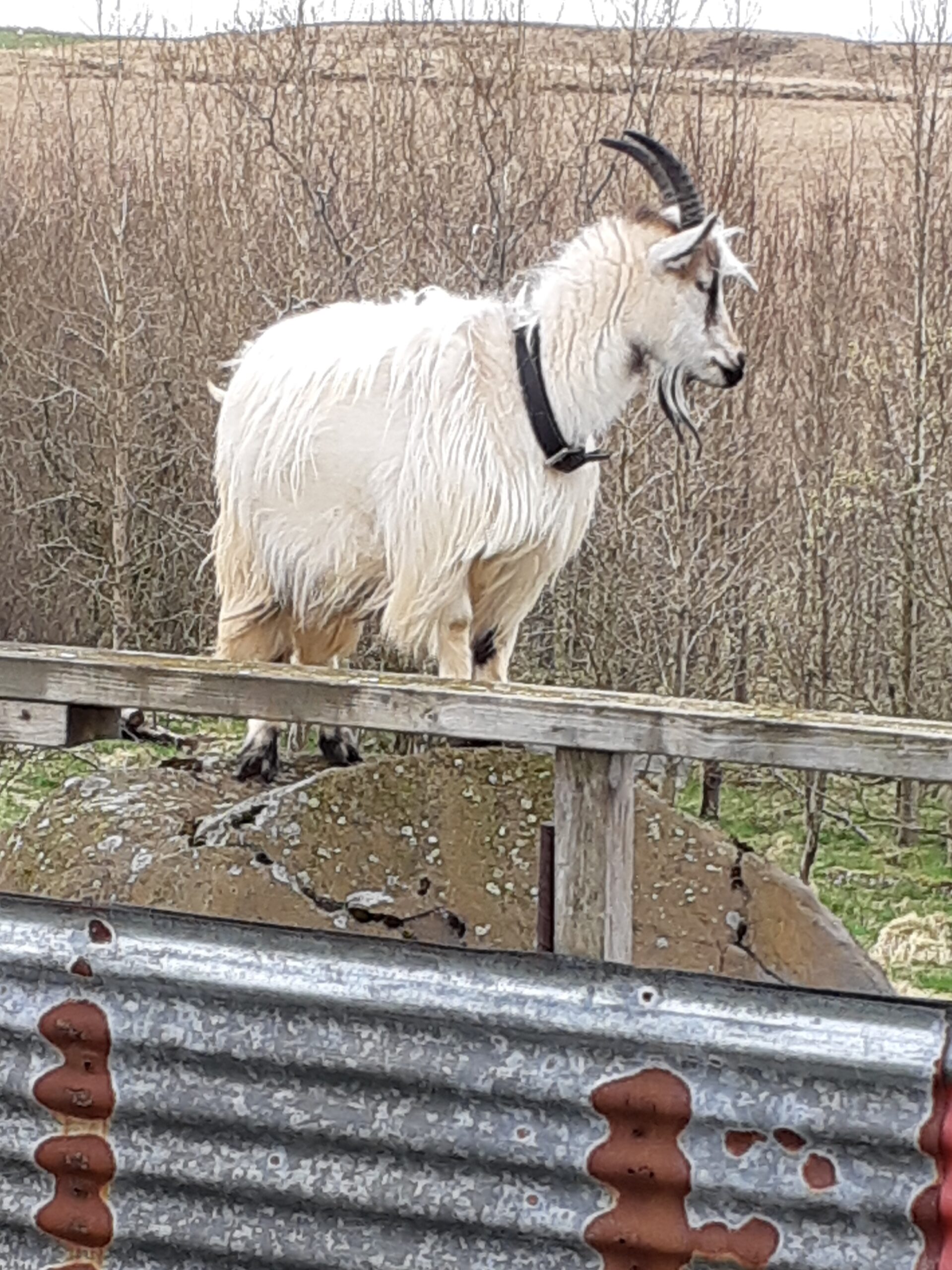
Landnámsmennirnir sem hingað komu í upphafi landnáms, tóku með sér þau dýr sem þeir töldu að væri gott að hafa til að byrja nýtt líf í óþekktu landi. Eina spendýrið sem hér var við landnám var refurinn. Landnámsmennirnir komu svo með hesta, kindur, kýr, hænur, svín, hunda, ketti og geitur. Seinna voru minkar fluttir til landsins og eins og stundum gerist, þá sluppu þeir úr búrum mannanna og lifa nú villtir í náttúru Íslands.
The goat was to produce milk and the legend of the goat was, that it was the poor man’s cow. So they were looked down on. They were also a bit troublesome, because goats are sometimes very independent and sometimes do what they think is best and not what others want them to do. So when the cow was available and farmers in Iceland could afford to have a cow instead of a goat,- they preferred the cow.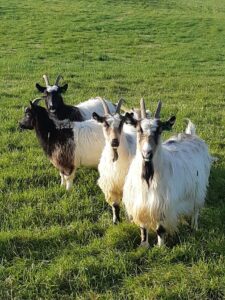
Once the Icelandic goat was nearly extinct and around 1960 there were 62 animals left in the country. I want to mention Jóhanna Bergmann Þorvaldsdóttir specially when I say that she went out on a mission to save the Icelandic goat. – And succeeded. It is written in our law that we are supposed to preserve the diversity of our livestock, and to prevent the possible endangerment of our goat breed. And many people have decided to keep few goats to protect them. There are few that can be counted for as being goat farmers, because there are only about 5 farmers who have 50 goats or more. At the end of the year 2022 there were 119 goat farmers registered in Iceland with 1.620 goats in total,- showing that they are still an endangered species.
Íslenskar geitur eru kasmír-geitur. Þær eru það samt ekki erfðafræðilega séð í raun og veru, heldur hafa þær aðlagast að veðrinu (stöðugum vindi) hér á Íslandi og hafa þær þróað með sér undirvöxt á mjúkum einangrandi feldi sem ver þær fyrir veðri og vindum. Það sem af þeim kemur kallast fiða og úr því verður kasmírgarn þegar það er spunnið. Hversu frábært er það!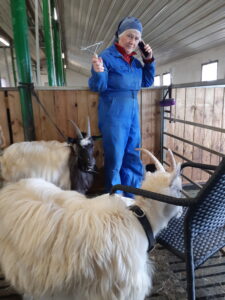
To get the fibre from a goat, they need to be combed. It is not shorn (cut off with scissors or shears) like from the sheep. A special comb is used and when the goat is shedding, it feels comfortable for them. Each goat gives very little fibre – about 300 gram maximum. It is time-consuming to card out the fibre when they shed in spring. If it is done to early, it is stuck and the goat is not happy, and if it is done to late, the fibre is felted and can not be processed. So if you want to use the fibre, you have to be ready when the goat is ready.
Við höfum spunnið geitafiðu í Uppspuna frá því við byrjuðum haustið 2017. Það er mjög tímafrekt að spinna geitafiðuna og ég hef alltaf gert það úr 100% hreinu hráefni. En ég vissi óskaplega lítið um geitur almennt og langaði að læra meira. Mig langaði líka að taka þátt í að vernda íslenska geitastofninn.
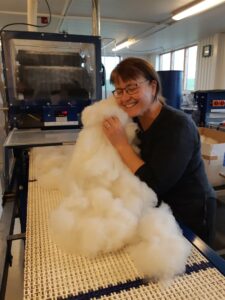
Þannig að haustið 2021 fékk ég mér 4 huðnur og 1 hafur til viðbótar við bústofn okkar. Síðasta vor (2022) kembdi ég mínum eigin geitum í allra fyrsta sinn og það kom mér á óvart hvað það var gaman. Þær nutu þess að láta kemba sér og þetta varð gæðastund hjá mér og geitunum, þar sem ég settist hjá þeim í nokkrar mínútur á dag, nokkra daga í röð og kembdi þeim frá hálsi og niður allan skrokk. Og í poka fékk ég þetta magnaða hráefni. Úr því gat ég svo gert garn. Og þvílíkt garn!!! Þetta er eitthvað allt annað. VÁ! Það er eiginlega ekki hægt að lýsa því, það verður að snerta. Og það er alltaf jafn gaman þegar ég er með kynningar, að sjá svipinn á fólkinu þegar ég rétti því geitafiðu eða kasmírgarn og leyfi því að snerta. :-)
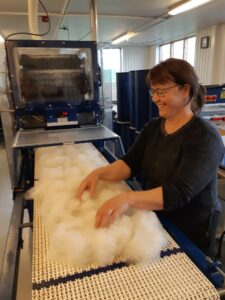
Now that I finally had a little amount of goatfibre of my very own, I decided to make some experiments. I had a fleece of grey wool from a lamb of mine that was unusually soft. And I decided to take it twice through the fibre separator and get more of the tog (the coarser hair) out of the lambs fleece. That way I had more thel (the inner coat). I mixed it with the goatfibre. 10% wool with 90% goat and 20% wool with 80% goat and it is just amazing. It is so soft and nice and can very nicely be processed that way without harming the goatfibre. And the biggest benefit of it was that I could spin it straight after the spinning of a wool. But usually when I spin goatfibre, we have to change some of the machines and it takes more time, and it is actually a lot of trouble to spin it on it’s own. So adding 10 or 20 % of wool and still have this amazing quality in the yarn and getting it spun more easily made me very happy. I did one experiment more with one farmer’s goatfibre with her permission.- I put 30% of the grey lamb’s wool, but then I could feel there was wool in it. So my conclusion is that adding 10 or 20% of good quality lambs wool with the goatfibre makes it easier to spin and the quality is still there.
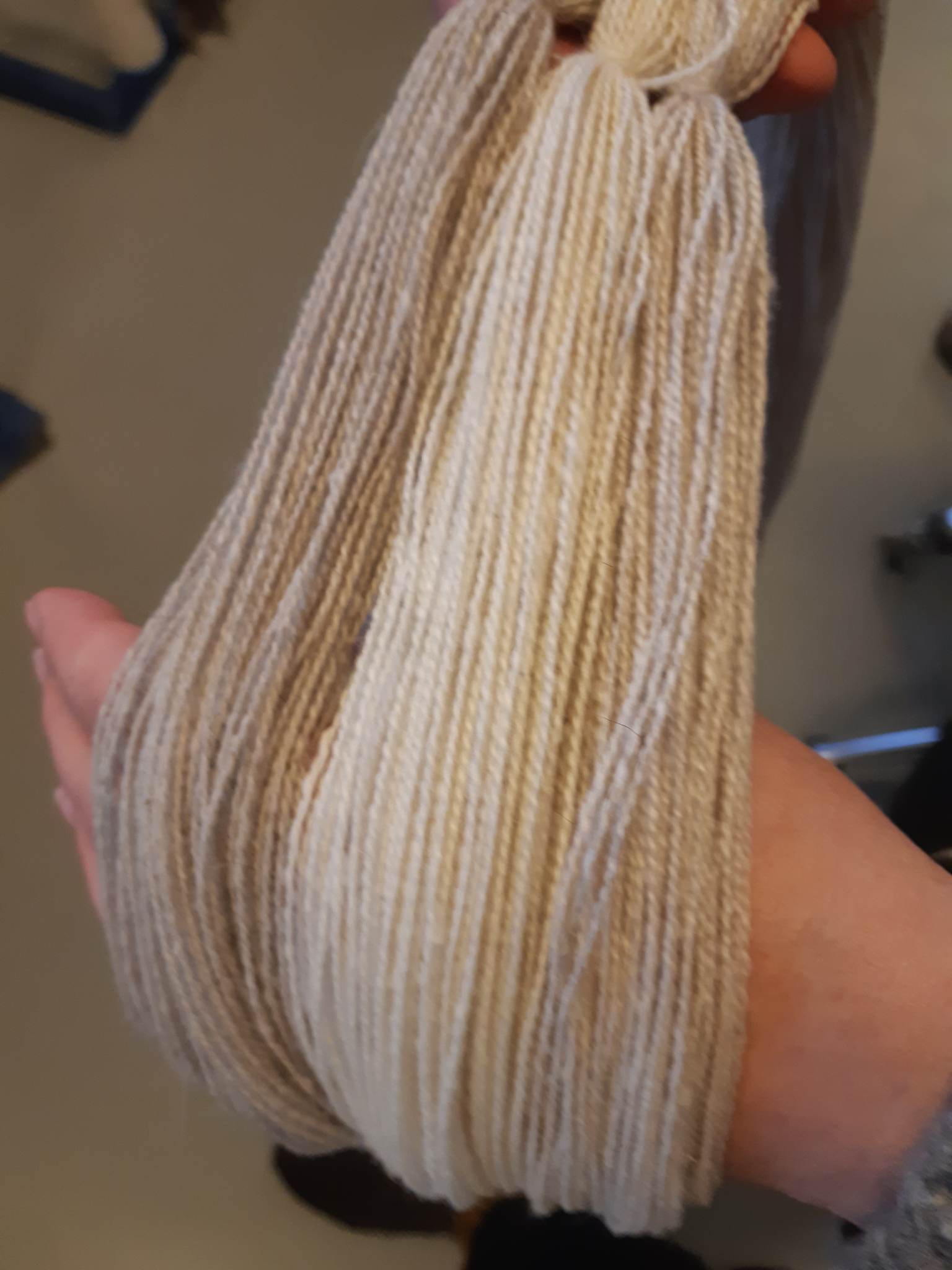
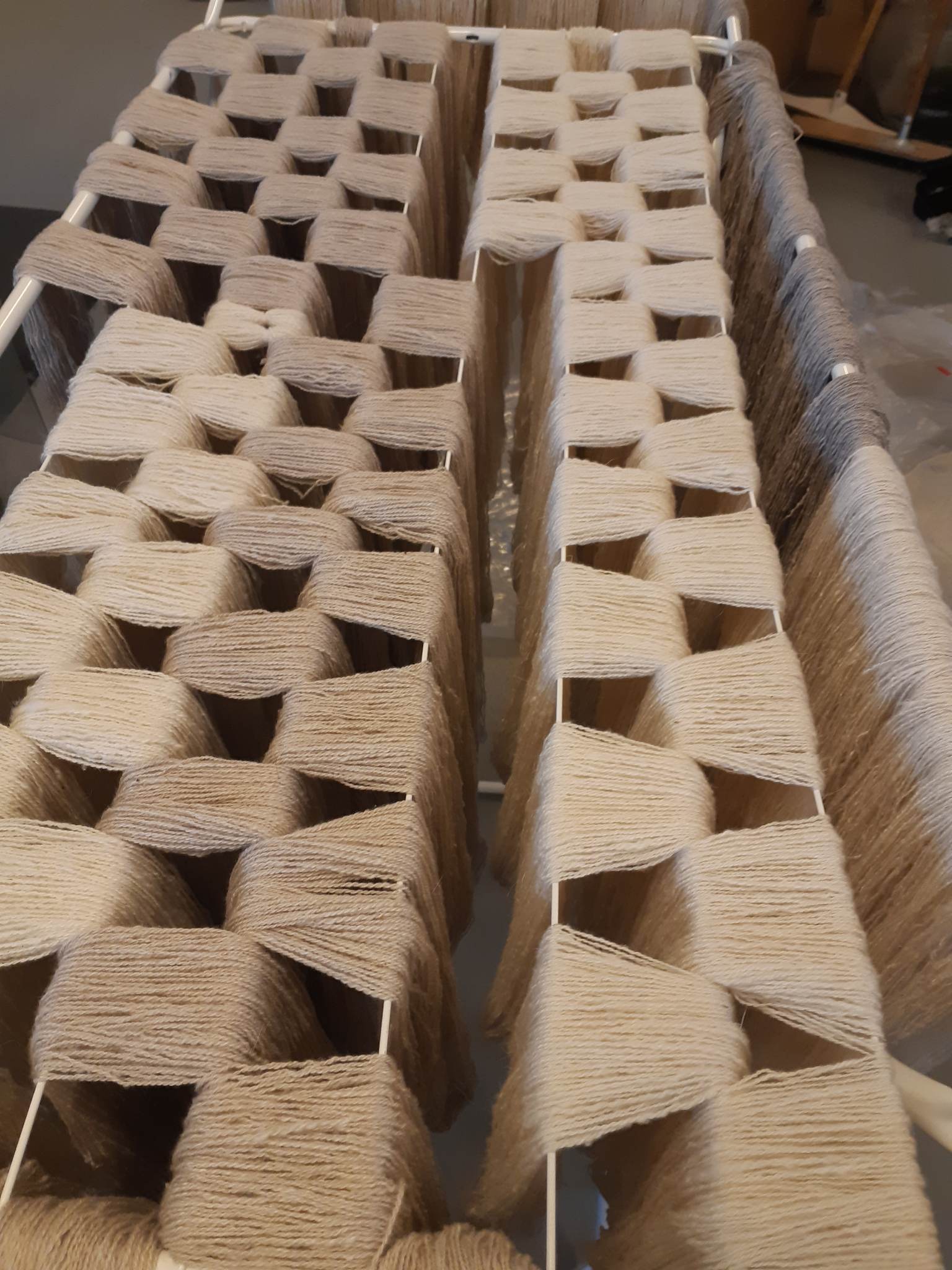
Það er stundum hægt að fá þrjá ólíka liti úr kasmírgarni, en oftast eru þeir einn eða tveir. Að blanda ull saman við myndi fjölga litamöguleikunum.
Ég hef prófað að lita garnið og það tekur lit mjög vel. Að prjóna úr því er líka mjög skemmtilegt. Það er svolítið sleipt og laust í sér, en gerir geggjaðar prjónaflíkur. Uppspuni er eina spunaverksmiðjan á Íslandi sem vinnur úr íslenskri geitafiðu og við gerum það frekar fínt. 100 metrar eru u.þ.b. 25 grömm sem er kallað fingering á ensku. Ein slík hespa dugar í úlnliðsstúkur eða sokkapar á ungabarn. Stundum dugar hespan í bæði hosur og vettlinga á ungabarn.
I don’t have cashmere yarn for sale on my website, only in my shop above the mill. But it is possible to email me at Ég mæli svo sannarlega með því að nota það í eitthvað alveg einstakt sem þig langar að búa til.
Eins og ég sagði; Það er engu öðru líkt!