Við erum geitabændur
Þegar við fórum að hugsa um að opna smáspunaverksmiðju á Íslandi haustið 2016, þá höfðu geitabændur strax samband við okkur og spurðu hvort við myndum ekki vinna geitafiðu í band. Þeir sögðust hafa sent í samskonar spunaverksmiðju í Evrópu og því væri það vel hægt í þeim vélum sem við værum að kaupa. Svo, við sögðum "já".
Vélarnar mættu á hlaðið alla leið frá Kanada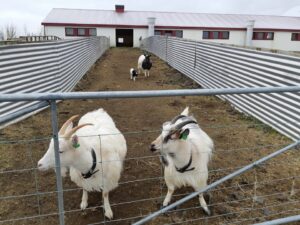 og með þeim ákaflega góður kennari sem kenndi okkur að nota þær og búa til garn. Síðan fóru fram þrotlausar æfingar til að gera garnið eins gott og mögulegt væri.
Eftir nokkra mánuði kom annar Kanadamaður og kenndi okkur meira og þá lærðum við að vinna geitafiðu.
Við komumst að því að íslenskar geitur framleiða kasmír sem er gullið í garni og því afar eftirsótt. Og það kom fljótt í ljós að garnið sem varð til úr geitafiðu var engu öðru líkt. - Og þá er ég að tala um garn almennt séð, ekki það sem við höfðum verið að gera mánuðina á undan.
En jafnvel þó að ég sé alin upp í sveit og maðurinn minn líka, þá hefur hvorugt okkar nokkurn tíman fengist við geitabúskap. Þekking okkar á þeim var því afar takmörkuð.
Þegar fólk fór að spyrja okkur um hvernig væri best að meðhöndla hráefnið og fóðra þær til að fá góða fiðu, þá varð fátt um svör og komið að tómum kofunum hjá okkur báðum.
En við viljum gjarnan gera hlutina eins vel og okkur er mögulegt og til þess að ná því án þess að vera með getgátur og innihaldslausar tillögur, þá fórum við að leita að upplýsingum til að vita eitthvað meira. Fyrst á netinu og með því að tala við reynda geitabændur, en einnig af bókum. Ekkert, ... eða mjög lítið var til á íslensku.
og með þeim ákaflega góður kennari sem kenndi okkur að nota þær og búa til garn. Síðan fóru fram þrotlausar æfingar til að gera garnið eins gott og mögulegt væri.
Eftir nokkra mánuði kom annar Kanadamaður og kenndi okkur meira og þá lærðum við að vinna geitafiðu.
Við komumst að því að íslenskar geitur framleiða kasmír sem er gullið í garni og því afar eftirsótt. Og það kom fljótt í ljós að garnið sem varð til úr geitafiðu var engu öðru líkt. - Og þá er ég að tala um garn almennt séð, ekki það sem við höfðum verið að gera mánuðina á undan.
En jafnvel þó að ég sé alin upp í sveit og maðurinn minn líka, þá hefur hvorugt okkar nokkurn tíman fengist við geitabúskap. Þekking okkar á þeim var því afar takmörkuð.
Þegar fólk fór að spyrja okkur um hvernig væri best að meðhöndla hráefnið og fóðra þær til að fá góða fiðu, þá varð fátt um svör og komið að tómum kofunum hjá okkur báðum.
En við viljum gjarnan gera hlutina eins vel og okkur er mögulegt og til þess að ná því án þess að vera með getgátur og innihaldslausar tillögur, þá fórum við að leita að upplýsingum til að vita eitthvað meira. Fyrst á netinu og með því að tala við reynda geitabændur, en einnig af bókum. Ekkert, ... eða mjög lítið var til á íslensku.
Íslenska geitin var næstum útdauð á sjöunda áratugnum. Enginn hafði alvöru áhuga á að búa með þær og það var litið á þær sem gæludýr og vesenis skepnur sem engin girðing héldi og þær ætu öll tré og blóm. En Jóhanna Bergmann Þorvaldsdóttir á Háafelli var ekki á sömu skoðun og hún fór í herferð til að bjarga þeim árið 1999. Hún vakti mikla athygli og áhuga annarra til að hjálpa henni við að bjarga íslenska geitastofninum og aðrir fengu sér geitur í þeim tilgangi. in farming with them and most people looked at them as pets and of no use but making problems – crossing every fence and eating every flower and tree. Then Jóhanna Bergmann Þorvaldsdóttir in Háafell went into mission to save the Icelandic goat. She earned a lot of attention doing so, and people joined her, getting goats of their own and formed an organisation around them. Since then people are starting again to use what the goat provides, like the milk and the fibre. And today we have over 1.500 goats in Iceland. They are an endangered specie and need to be observed and cared for to keep their number.
Við fengum upplýsingar um geitabúskap með því að tala við Jóhönnu og fleiri geitabændur og með því að skoða vandlega það hráefni sem barst til okkar í spunaverksmiðjuna.
Við sáum mjög fljótt að ef við ætluðum að vita hvernig ætti að meðhöndla geitur, yrðum við að prófa það sjálf. Svo þið sjáið hvert þetta er að leiða okkur...
Við fengum okkur kiðlinga!!!
Haustið 2021 komu 4 huðnur og 1 hafur heim til okkar og geitabúskapur okkar hófst. Við fórum inn í veturinn og lærðum fóðrun og meðhöndlun af bókum og með því að spjalla við reyndari geitabændur. Því miður slasaðist ein og drapst af meiðslunum, en hinar voru hraustar og sprækar og mjög gaman að vinna með þær.Ég kenndi þeim að teymast um húsið og jafnvel úti og þær eru fljótar að læra.
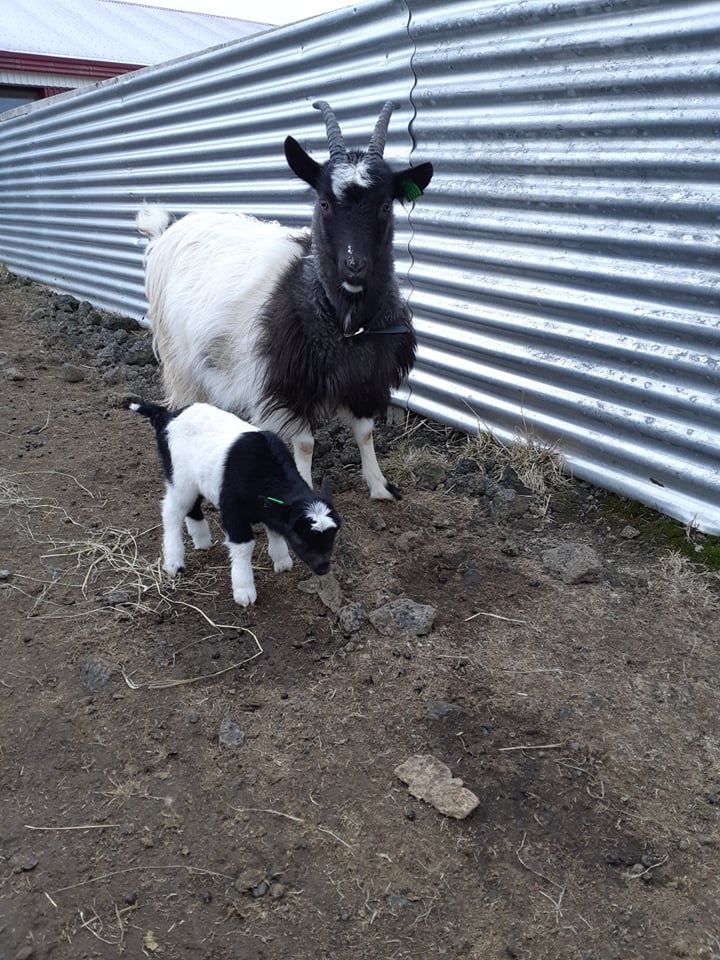
Nú erum við búin að upplifa allra fyrstu fæðingu kiðlings á okkar búi og okkur þykir það býsna merkilegt. Burðurinn tókst vel, huðnu og kiðlingi heilsast vel og litli hafurinn er farinn að hoppa og skoppa. Það sem er enn betra er að huðnan hefur góða móðureiginleika, mjólkar vel og hugsar vel um nýfæddan soninn. Það er mikill kostur. Ég get varla beðið eftir að hinar tvær eignist sín kið.
Við höfum lært alveg helling. 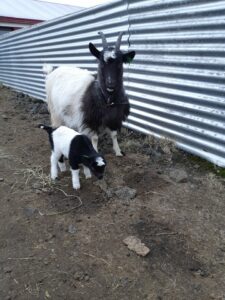 En eigum enn margt ólært. Í framtíðinni væri til dæmis mjög gaman ef ég gæti búið til ost úr eigin geitamjólk.
En núna fær þessi litli kall alla mjólk sem mamma hans býr til..
En eigum enn margt ólært. Í framtíðinni væri til dæmis mjög gaman ef ég gæti búið til ost úr eigin geitamjólk.
En núna fær þessi litli kall alla mjólk sem mamma hans býr til..
Öll mín dýr hafa nafn. Allar 150 kindurnar, Allar 30 kýrnar, Allar 16 hænurnar og að sjálfsögðu allar geiturnar. Það fá allir nafn, þegar búið er að ákveða að viðkomandi verði áfram á búinu. Þessi huðna heitir Hrefna og þar sem þessi hafur er fyrsti kiðlingur sem fæðist hér, þá hlýtur hann að fá merkilegt nafn. Við höfum því gefið honum nafnið Prins.